

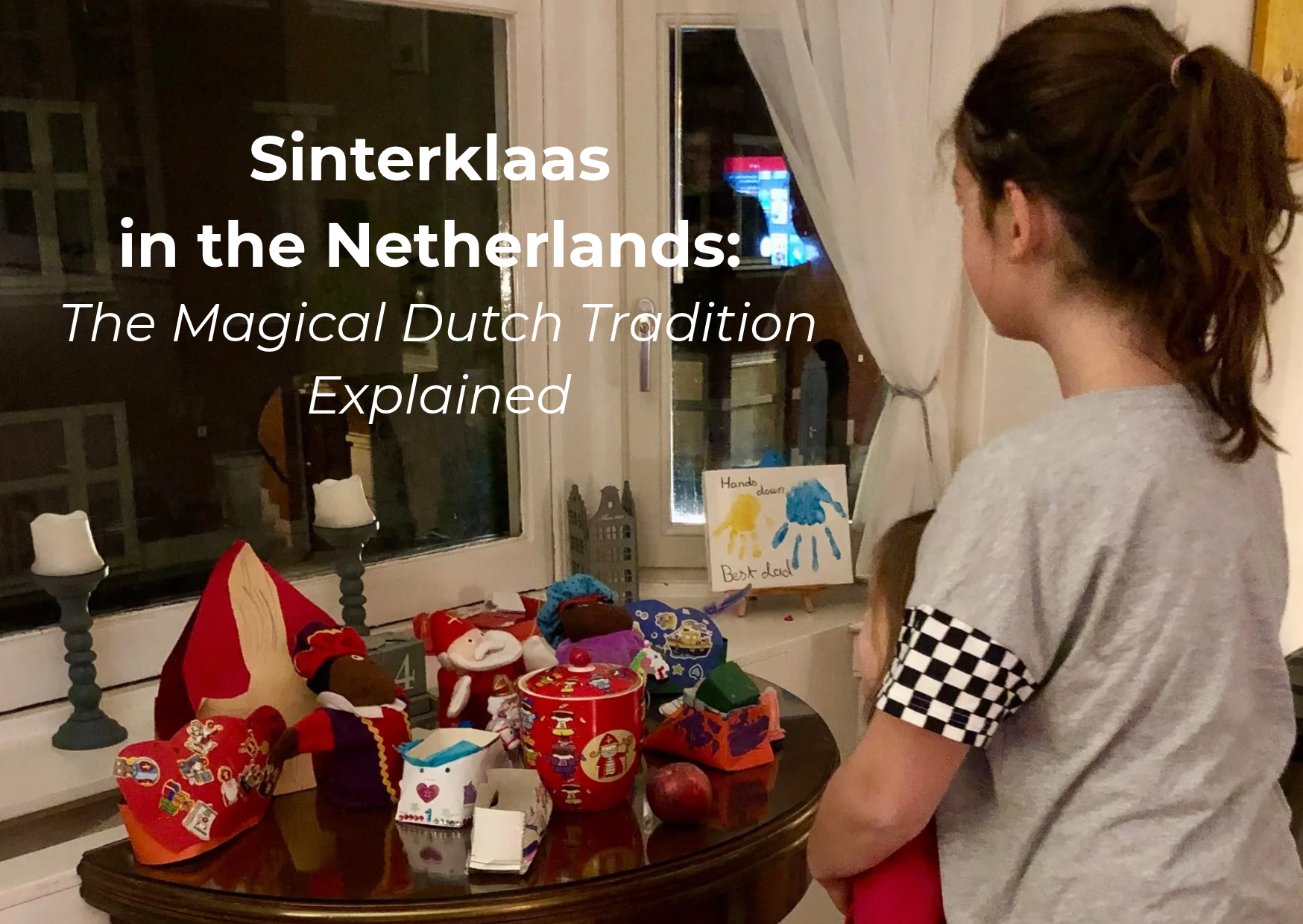
Discover the Dutch tradition of Sinterklaas, from his arrival in November to the magic of Pakjesavond.
If you’ve recently moved to the Netherlands, you might be surprised to see a man with a long white beard, a red bishop’s robe and a golden staff arriving on a steamboat from Spain in the middle of November.
And no, it’s not Santa Claus!
Meet Sinterklaas, one of the Netherlands’ most beloved traditions, especially for families with young children.
But who exactly is he, why does he ride a white horse, and why do Dutch children leave their shoes by the fireplace?
Let’s discover the magic of Sinterklaas!
Who Is Sinterklaas?
Sinterklaas, short for Sint Nicolaas (Saint Nicholas), is based on Saint Nicholas, a fourth-century bishop known for his generosity and kindness. Unlike Santa Claus, who is associated with Christmas, Sinterklaas has his own celebration in the Netherlands.He wears a red bishop’s robe and mitre, carries a golden staff and travels on his famous white horse. According to Dutch tradition, Sinterklaas lives in Spain and travels to the Netherlands every November with his helpers, known as Pieten.
Together, they bring presents, sweets and plenty of excitement for children across the country.
The Arrival: Sinterklaas Is Coming to Town!
Every year, around mid-November, Sinterklaas officially arrives in the Netherlands by steamboat. This event is called the intocht, and it’s a big occasion! Thousands of families gather along canals and streets to welcome him, waving, singing traditional songs and watching the festive procession. After stepping off the boat, Sinterklaas usually continues his journey through the town on his horse, accompanied by his Pieten, who hand out treats and entertain the children.
Many Dutch cities and villages organise their own arrival celebrations. For international families, attending an intocht is a wonderful way to experience Dutch culture firsthand.
Why Do Children Put Their Shoes Out?
One of the most charming traditions is called schoentje zetten, or putting out your shoe. During the weeks leading up to 5 December, children place a shoe near the fireplace, front door or another special spot in the house. They may leave a carrot or some hay for Ozosnel, sing Sinterklaas songs and hope that Sinterklaas and his Pieten will visit during the night. By morning, the carrot has disappeared, and a small surprise might be waiting inside the shoe! This could be a chocolate letter, a little present or some traditional sweets.
Pakjesavond: The Big Celebration on 5 December
While Christmas presents are traditionally opened on 25 December in many countries, Dutch families often celebrate their main gift-giving occasion on 5 December, known as Pakjesavond. Families gather at home, sing Sinterklaas songs and exchange presents. Sometimes, there’s a mysterious knock at the door, followed by a sack full of gifts!
For older children and adults, the tradition often includes surprises: creatively wrapped presents accompanied by humorous, personalised poems called Sinterklaasgedichten.
And of course, no Sinterklaas celebration would be complete without pepernoten, kruidnoten, speculaas and chocolate letters!
So, What About Santa Claus?
Here’s something that surprises many newcomers: Sinterklaas and Santa Claus are two different figures in the Netherlands. Sinterklaas arrives in November, rides a white horse and celebrates on 5 December. Santa Claus, known in Dutch as de Kerstman, is associated with Christmas on 25 December. The Dutch know both figures, and some families celebrate both occasions, but Sinterklaas has a particularly important place in Dutch family traditions.
In fact, the American Santa Claus was historically influenced by the Dutch tradition of Sinterklaas!
Where Can You Welcome Sinterklaas in 2026?
This year, the national arrival takes place on Saturday, 14 November, in Grave, North Brabant.
In Amsterdam, Sinterklaas arrives on Sunday, 15 November, with a festive boat arrival followed by a parade through the city.
Many other Dutch towns organise their own celebrations, so check your municipality’s website for local events.
So, if this is your first Sinterklaas season, enjoy the magic and don’t forget to put your shoe out!


Leave A Comment